If your electricity bill keeps climbing month after month, you’re not alone. With energy prices rising and concerns about sustainability growing, solar PV modules have become one of the most dependable and affordable energy solutions for homeowners, businesses, and industries. But before you invest, it’s important to understand what makes a solar PV module efficient, cost-effective, and future-ready.
What is a Solar PV Module?
A Solar PV (Photovoltaic) Module is the core component of any solar panel system. It converts sunlight directly into electricity through photovoltaic cells. These modules are built with interconnected solar cells, shielded by glass, encapsulation layers, and a sturdy aluminium frame to ensure durability.
If you’re unsure about how a PV module compares to a complete solar panel, check our guide on the difference between solar modules and solar panels for a clearer understanding.
Types of Solar PV Modules:
- Monocrystalline (Mono-PERC) Modules are known for high efficiency and premium performance, making them perfect for both residential and commercial installations where space is limited. Saatvik offers:
- N-Type TOPCon bifacial modules use advanced cell technology to deliver exceptional power output while capturing sunlight from both sides of the panel. Saatvik provides two popular options:
Whether you’re comparing solar module prices or evaluating different manufacturers, understanding these module types is the first step toward making a smart investment.
Top Features of Solar PV Modules
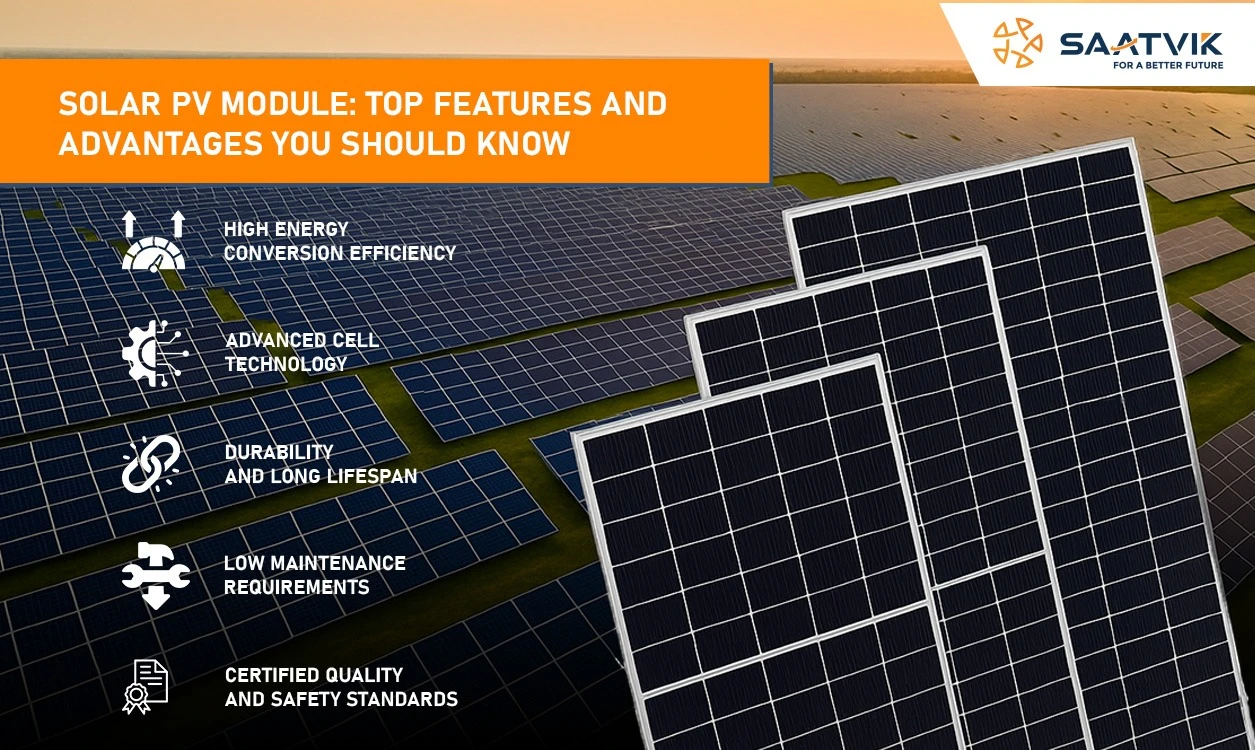
- High Energy Conversion Efficiency: Modern PV modules boast efficiency rates ranging from 18% to 23%, which means you get more power from every square meter. This high efficiency is especially beneficial when roof space is at a premium.
- Durability and Long Lifespan: Top-quality modules are designed to endure all sorts of weather—be it rain, wind, snow, or extreme heat. Most of them come with a solid 30-year performance warranty, giving you peace of mind about your long-term investment.
- Advanced Cell Technology: Innovations like PERC, Half-cut, and TOPCon cells help minimize power losses. Plus, bifacial modules can harness energy from both sides, which really boosts their output.
- Low Maintenance Requirements: These systems typically
require just occasional cleaning. Some even offer remote monitoring features, allowing you to keep an eye on performance in real time. - Certified Quality and Safety Standards: Make sure to look for IEC or UL certifications to guarantee that the modules meet global quality standards. Reputable solar panel manufacturers also provide linear power warranties, ensuring consistent output over the years.
Advantages of Using Solar PV Modules
Significant Cost Savings on Electricity
- Reduce your energy bills by up to 70% or more, depending on system size.
- Declining solar PV module prices make solar a better investment each year.
Environmentally Friendly
- Solar panels generate clean, renewable energy with no carbon emissions.
- Supports ESG (Environmental, Social, Governance) initiatives for businesses.
Energy Independence
- Protect your home or business from rising grid power rates.
- Pair with battery storage for reliable backup during outages.
Scalable and Versatile Applications
- Used in residential rooftops, commercial spaces, industrial warehouses, and institutional campuses.
- Can be installed as ground-mounted systems where roof space is limited.
Government Incentives and Subsidies
Explore top government schemes for solar in India to take advantage of tax credits, rebates, and net metering programs that lower upfront costs.
How to Choose the Right Solar PV Module
When you’re looking at solar module prices or checking out solar PV module price lists, keep these factors in mind:
- Efficiency rating (this tells you how much power you can get from each panel)
- Warranty period (look for both performance and product warranties)
- Brand reputation (stick with well-known and trusted solar panel manufacturers)
- After-sales support (make sure maintenance and service are easy to access)
Also, don’t forget to hire a professional for the installation. Proper mounting and wiring are essential for achieving optimal performance and longevity from your system.
Not sure how to evaluate solar providers? Check our guide on 10 questions to ask before choosing a solar company to make an informed decision.
Why You Should Make the Switch to Solar Right Now
Investing in a Solar PV Module isn’t just a great way to help the environment—it’s also a savvy financial choice. With solar module prices dropping, technology advancing, and government incentives available, there’s no better time to set up a solar panel system from trusted manufacturers.
Are you ready to tap into the sun’s energy? Reach out to Saatvik Solar at 18005471151 to get high-performance PV modules customized to fit your energy needs.
FAQs (Frequently Asked Questions)
1. What is the current solar PV module price in India?
Prices vary by brand, efficiency, and technology, but high-quality modules typically range between ₹20–₹30 per watt.
2. What are the key features of a Solar PV Module?
- High energy efficiency (18–23%)
- 25+ year performance lifespan
- Weather-resistant and low maintenance
- Certified by IEC/UL for safety and quality
3. How many solar panels do I need for my home?
This depends on your energy consumption and roof size. On average, a 3–5 kW solar panel system works for most households. For a complete calculation, read our guide on how many solar panels are required for a home.
4. Are solar modules worth it for businesses?
Yes—businesses benefit from reduced operational costs, tax incentives, and enhanced ESG compliance.