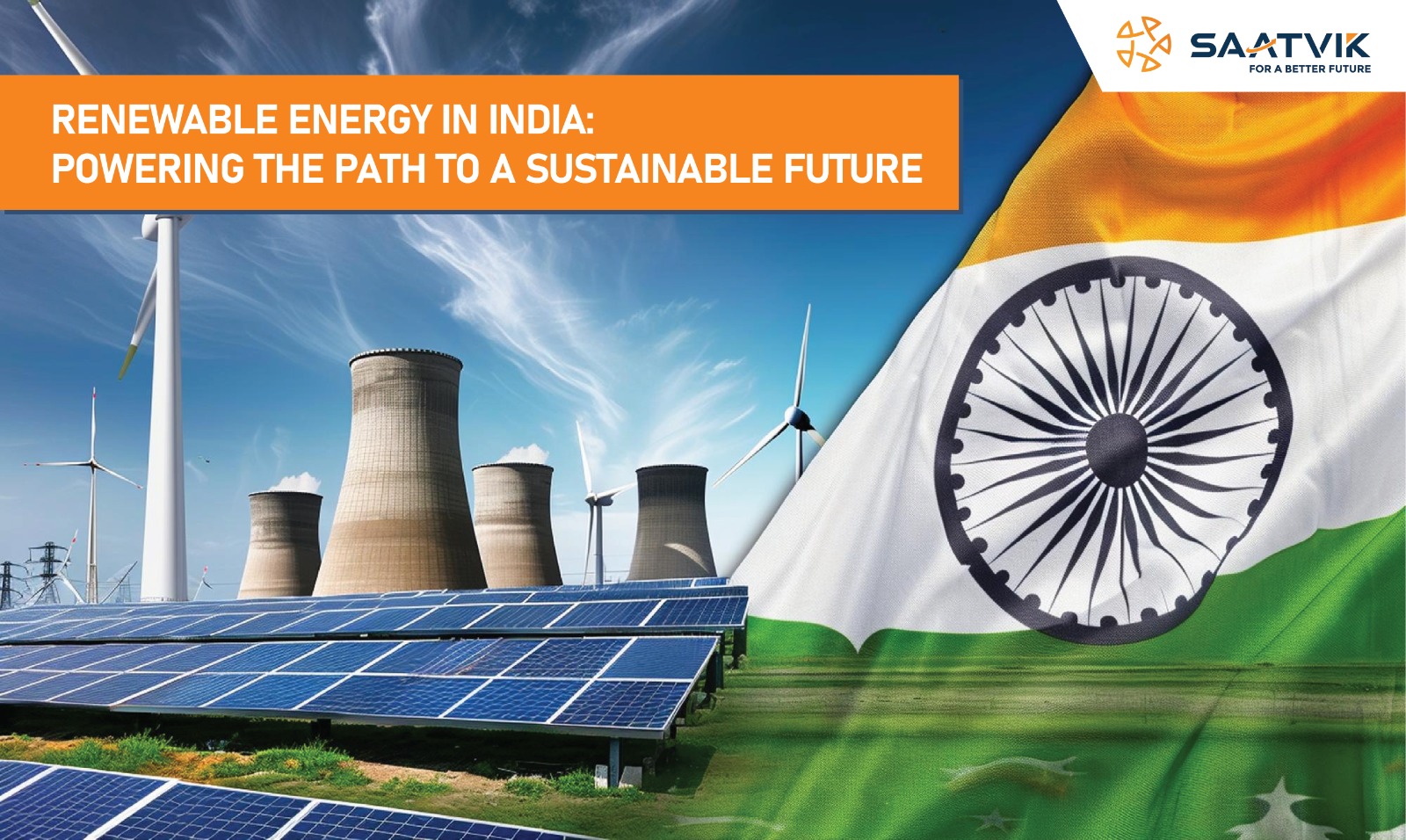
India is growing tremendously, and with growth comes the demand for power. This demand can’t be fulfilled by limited fossils, and moreover, they are the prime reason for pollution and climate alterations. This is the passage where Renewable energy in India fits well. Right from solar & wind to hydropower, clean energy is shaping India’s future sustainably. It is our duty towards the people and the nation to empower them in every way, and what’s better than making it energy independent?
Excited to hop onto the green bandwagon, this write-up is for you. Each detail is crucial, so be with it till the last line.
The Rise of Renewable Energy In India
India, due to its commitment to a better future, stands as the third-largest energy consumer in the world. To tackle the future energy demands while reducing the percentage of carbon emissions, the Indian government has set an ambitious target of 500 GW of renewable energy by 2030.
It includes several aspects, like:
- Large Scale Solar Power Projects
- Rooftop Solar initiatives
- Onshore and offshore wind projects
- Biomass & hydropower projects
Why Go With Renewable Energy In India?
The nation is grappling with climate change, increased pollution, spiked fossil fuel prices, and emerging energy security, making renewable energy in India crucial than it was ever. The switch to green energy sources like Solar, wind, green hydrogen, etc, not only reduces the effects of climate change but also takes care of high pollution and health-related issues.
Still unconvinced whether to choose renewable energy in India or not? Here is the list given with all the benefits for the same.
1. Environmental protection and climate mitigation
- Renewable energy significantly reduces the emissions of greenhouse gases, leading to better air quality.
- Minimal water usage in renewable energy conserves India’s account of freshwater account.
- Clean energy has a low impact on land and biodiversity in comparison to conventional methods.
2. Economic growth & Job creation
- Investing in renewable energy in India can create three times more jobs than a fossil-based project.
- Growth in green energy stimulates local economies and encourages entrepreneurship even in remote areas.
3. Social empowerment and inclusive development
- Adoption of renewable energy in India forms new livelihood opportunities mainly for women, indigenous societies, and communities.
- Solar-powered agricultural solutions like irrigation pumps and cold storage boost rural productivity and cut down urban mitigation pressures.
- Local ownership models and community-based projects promote social inclusion.
4. Public health enhancements
- Clean energy improves the total population’s health along with air quality, specifically in urban and industrial regions.
- Usage of green energy lowers cardiovascular diseases, decreasing the number of premature deaths and healthcare costs.
5. India’s climate commitment & ESG compliance fulfilment
- Choosing renewable energy is crucial for fulfilling India’s climate goals, which cover a 45% reduction in carbon emissions by 2030 and attaining net-zero emissions by 2070 under the Panchamrit Initiative.
- India’s renewable energy sector aligns well with ESG standards by promoting social equity, environmental stewardship, and transparent governance.
Key Government Steps To Encourage Renewable Energy in India
The Indian government remained too much active and worked a lot in this domain for the fulfilment of their targets. Look what all the major policies the government has released.
1, National Solar Mission
Accelerating the solar capacity across the entire India.
2, PM KUSUM Scheme
Assisting farmers in the adoption of solar pumps and solar panels.
3, Green Hydrogen Mission
Aiming to position India as a future leader in hydrogen energy.
4, Renewable Energy Investment Promotion
Opening doors for global and international companies to invest in Indian solar, wind, and other renewable energy projects in India.
5, PM Surya Ghar Muft Bijli Yojana
Targeted to install rooftop solar plants in one crore households with a total financial outlay of ₹75,021 crore that to by the end of FY27.
6, FDI (Foreign Direct Investment)
Up to 100% FDI is permitted under the automatic route for renewable energy generation.
7, Solar Parks Scheme
To provide solar developers with a plug-and-play model by offering needed infrastructure with all statutory clearances.
India’s Green Leap: A Strong Vision For A Sustainable Future
Under the leadership of our Prime Minister, India makes remarkable progress in the adoption of clean energy. India has become a forerunner in the domain of renewable energy in India, especially in Solar energy. By the end of Oct 2024, India already have installed 90 GW of solar power. And this is just the beginning as India sets an ambitious target of 500 GW of renewable energy by 2030.
One of the notable achievements for India was the launch of Solar parks and ultra mega solar power projects in 2014. It was a game-changer for India as it made solar cheaper and more accessible by reducing bureaucratic hurdles and offering necessary infrastructure. India’s success in scaling solar power is paired with its efforts in manufacturing solar panels and other renewable energy equipment.
Future of Renewable Energy in India: The Road Ahead
Clean energy is not a fad but the need of the hour. Our commitment to a better tomorrow is significant and demands the adoption of renewable energy in India. Technological advancements, less solar panel price, and government incentives are not the only things in future of renewable energy in India. See what else the nation is doing:
Centre-state coordination
The central government needs to work with the state government to identify the vacant lands for RE zones. Similarly, the states need to ensure the “must-run” status for renewable energy feeding into the grid is achieved in a precise manner.
Note: “Must-run” here means that the concerned power plants must supply the power to the grid under all conditions.
Financing Standardization
Streamlining the financial procedures, like standardization of the contracts, making all the relevant information available, and expanding the use of the green bonds, etc.
Optimization of land usage
Promoting the use of marginal land, wasteland, vacant spaces, and barren rooftops for solar projects to reduce the usage of agricultural and forest lands.
Increase Energy Storage Capacity
Getting hands on the energy storage system, like pump-storage hydroelectricity, battery storage, etc, should be used to accumulate energy from RE to be used at some other times of the day. It can improve the grid stability, enabling peak shifting.
By the end of 2030, Renewable energy can effortlessly fulfil half of India’s electricity needs, making the country a global leader in clean energy.
In Essence!
Renewable Energy in Indian is not an option at all but a mere necessity. It is a crucial step for the global fight against climate change. With sustained efforts, new policies, and global collaboration, India is poised to emerge as a sustainable nation in future, leading the way towards a resilient global energy landscape.
The future of renewable energy in India is not only bright, but it is solar-powered, wind-driven, and investor-ready.
FAQs (Frequently Asked Questions)
1. Which renewable energy source is mostly used in India?
Solar and wind energy are the leading renewable energy sources in India.
2. What are the top benefits of adopting renewable energy in India?
The main benefits of clean energy in India are a sustainable future, eco-friendly resources, job creation, economic stability, and energy security.
3. What are the types of renewable energy in India?
Sources that can come under renewable energy in India are solar energy, wind energy, biomass, green hydrogen, geothermal, hydropower, and tidal energy.
4. What target did India set in the matter of renewable energy?
India aims for a goal of 500 GW of renewable energy capacity by the end of 2030.
5. How does renewable energy support economic growth?
Choosing green energy in India creates more jobs, form industries, infrastructure, and can cut down the fuel import bills, strengthening the entire economic conditions.