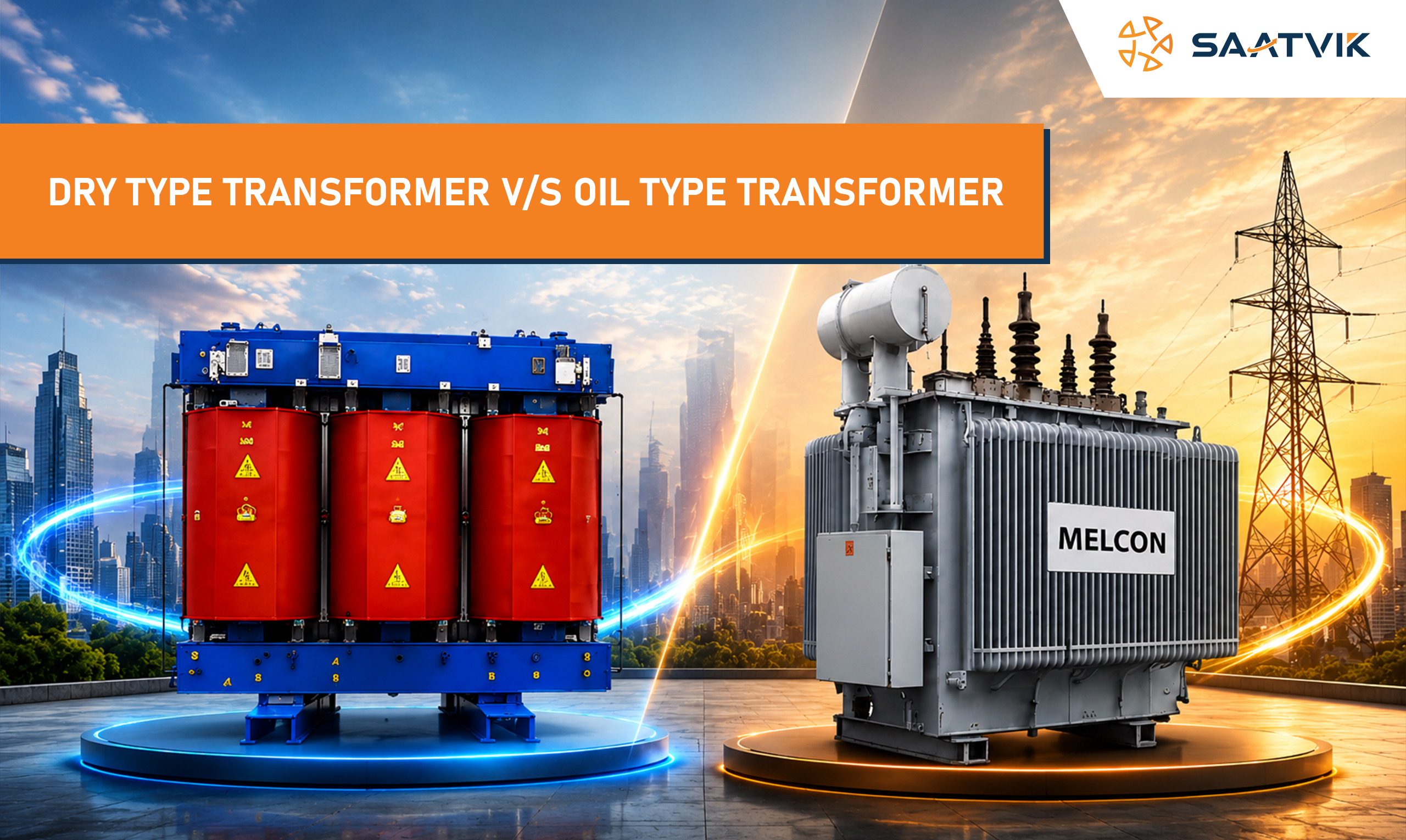
Ensuring a consistent, efficient, and uninterrupted power supply across infrastructure, industries, and commodities is crucial, and oil type transformers and dry type transformers play important roles in this regard. Transformers are the backbone of efficient and dependable power transmission, supported by cutting-edge technology from generation to consumption.
Both types of transformers include a cooling medium. Oil-type transformers utilize mineral oil or silicone liquid, whilst dry-type transformers use natural or forced air. Oil type transformers require external space for installation, however dry type transformers may be put on-site and are ideally suited for use in malls, hospitals, major institutions, and high-rise residences near load areas.
Oil type transformers have a higher efficiency and can handle massive power ratings and voltages up to and above 20MVA, whereas dry type transformers are specifically designed for low energy capacities and voltages up to 35 KVA. Maintenance for oil type transformers requires routine oil testing and filtration, whereas dry type transformers require very little maintenance, primarily cleaning dust from windings. Oil type transformers have a longer lifespan and are thought to be more cost effective solutions for large-scale operations, whereas dry type transformers have a shorter lifespan, a higher initial purchase price, and are thought to be appropriate for smaller operations across defined units and locations.
In terms of safety, oil type transformers are more prone to oil leaks and flammability and should be installed atop containment structures, whereas dry type transformers are non-flammable and emit no harmful spills or fumes.
Which transformer to be chosen: –
If power demand is high, combined with greater power ratings, and the unit needs to be put in an outbuilding, oil type transformers are the ideal option since they may provide extremely adequate and long-lasting solutions. And if the requirements are in tight interior locations for commercial use to meet daily power needs where fire protection and environmental safety are top priority, dry type transformers are the best option.
Woking matrix of Oil type and Dry type transformers: –
Oil-type transformers use electromagnetic induction to alter electrical voltage, with the core and windings entirely submerged in transformer oil, which serves as both a strong electrical insulator and a liquid coolant to keep the device protected from overheating during significant energy transfer. Where in as a dry type transformer changes electrical energy between circuits without direct physical contact. Instead of using cooling and insulation liquids dry type transformers uses solid insulation such as epoxy resin and air. For dry type transformer working mechanism is totally depends on primary excitation, magnetic flux linkage and Voltage induction.
To make it more safer heat generated during the induction process, must be safely dissipated, core benefits of these transformers are they are highly eco-friendly, pose zero fire risk and are idea electrical transformers for indoor applications.
Application of Dry type and oil type transformers
Dry type transformers are widely used across various industries and applications that are concerned about safety, reliability and environmental compatibility hence are best suited for chemical, oil and gas industry supplying power to various equipment and processes that involve flammable or explosive substances. Environmental sensitive areas are also equipped with dry type transformers that are used to protect the environment from oil spills and leakage resulting contamination of water sources, soil or natural habits especially in forests and wetlands.
If concern is related to the fire where defined zones falls under the high fire risk category dry type transformers play the most crucial and important role preventing fire hazards or minimize fire damages in areas that are prone to fire outbreaks or have strict fire regulations.
Oil type transformer application vary totally in a different state where in key application matrix primarily depends on the power generation and transmission usage especially for long distance connectivity power transmission, where in as substations are installed to reduce voltages for commercial and residential usage. Oil type transformers are best suited for heavy industries and machineries manufacturing firms as their supply requirements are continuous and demands heavy duty power for smother operational activities. Major renewable energy projects are too accompanied with oil type transformers especially solar and wind projects to efficiently handle fluctuating power loads and step up the energy generated for grid integration.
Conclusion:-
Both dry type and oil type transformers play crucial role in modern electrical infrastructure development. Correct selection of transformer totally depends on the your specific commissioning environment and power capacity needs. Indian transformers are well versified and stands technically strong even during harsh weather environment conditions. Saatvik Green recent acquisition of Melcon transformers are setting benchmarks in delivering reliable and quality products backed by years of trust and international technology along with dedicated round the clock service & maintenance support.