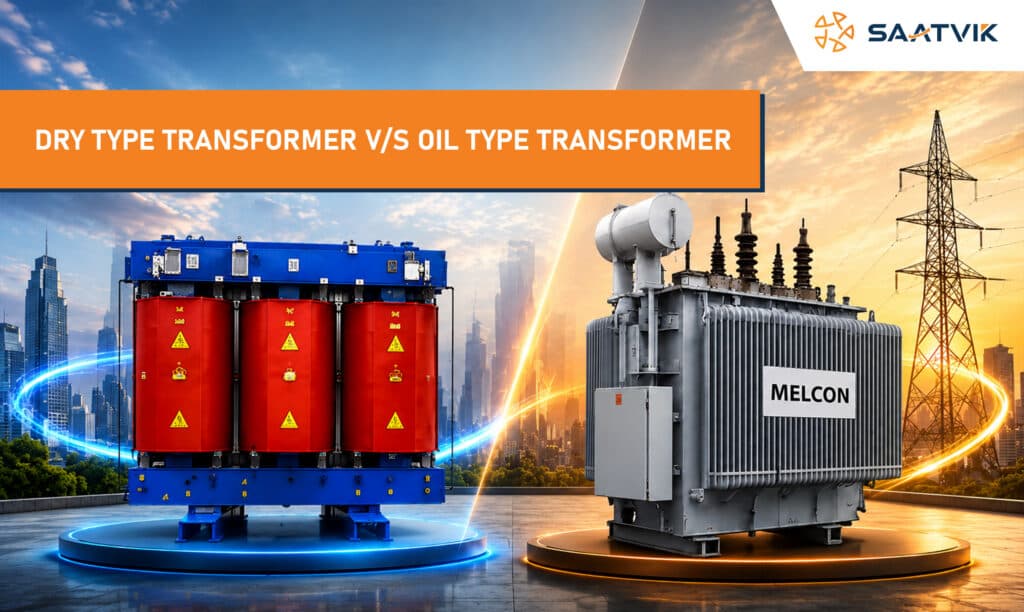
The Indian economy is increasing its clean energy resources and speeding the use of renewable energy. Major sectors such as oil, gas, and infrastructure are among the largest consumers of electrical power and are increasingly shifting to renewable energy to meet their demands. As the sectors migrate to digital, sustainable, and smarter energy systems, power distribution transformers play an increasingly important role. Transformers will change the oil and gas sector as futuristic and sophisticated technologies are integrated across the power industry, with an emphasis on SCADA-ready, smart energy efficient, and environmentally friendly designs that meet increased energy needs and safety standards.
The Role Transformers Are Playing in These Industries Today
Transformers today in the oil and gas industry ensure stable power supply for drilling equipment, refinery operations, pumping stations etc. These operational activities require continuous and uninterrupted power with high reliability to ensure overall operational efficiency. Transformers help regulate and distribute electrical power efficiently.
In the infrastructure industry, transformers are regarded as the foundation of power supply requirements and grid connection. From large-scale infrastructure projects and commercial development to transit networks, data centres, utilities, and urban planning. Transformers used in these sectors must tolerate severe temperatures, large voltage swings, and heavy loads while maintaining uninterrupted operation. With oil type distribution transformers becoming the lifeline for these industries, even small disruptions or technical faults can result in significant delays and financial losses. For such organisations, power failure also results in losses in productivity, dependability and, to an extent, safety concerns as well.
Challenges Faced by These Industries Using Traditional Transformers
Although traditional transformers have served these industries for decades, a shift towards adopting modern and high technology is now important, as traditional transformers come with limitations — modernization is necessary for staying updated in the tech environment. Conventional or traditional transformers have limited control over real-time monitoring, making fault detection slow and reactive. High load fluctuations and ageing design in traditional transformers lead to greater energy losses and impact the overall efficiency of the transformer. Traditional or conventional transformers have certain environmental concerns as well, such as the use of mineral oils, which can pose environmental risks in case of leakage or spillage. Frequent manual inspections and reactive repairs always increase the overall maintenance cost. With traditional transformers' applications and usages in these industries, experts have reviewed the challenges identified above.
With these obstacles in place, a transition to a wiser period is essential, with the future focusing on SCADA-ready transformers. These gadgets not only provide energy, but also function as an intelligent node in the oil and gas sector. Industries are demanding transformers that are future-ready, with features like IoT interfaces, self-diagnostics, environmentally friendly fluids, cybersecurity, and so on. The integration of SCADA in the oil and gas industry will undoubtedly provide real-time insights and improve overall performance, allowing engineers to remotely monitor transformer health, detect faults before they escalate, balance loads across multiple substations, and optimise power consumption at pumping stations.
Benefits of Smart Transformers for Oil and Gas
Future-ready smart application-enabled transformers offer operational and financial advantages including less downtime, improved safety, cheaper operating and maintenance costs, energy optimisation, and, most importantly, less environmental effect due to their eco-friendly design. Future-focused technological advancements target the infrastructure, oil, and gas industries. These sectors are likewise moving toward hybrid transformers that can handle both oil distribution and renewable energy connections.
Conclusion
Seeking the trend and transition toward futuristic technological trends, the conversion of industries to smart and digitalisation will undoubtedly be the next move. Industries will adopt smart electric transformers to meet their power needs. This is where smart transformers are expected to play a distinguishing role. Smart transformers, which are equipped with enhanced monitoring, sensors, remote diagnostics, and digital connection, may assist companies in monitoring vital parameters, identifying possible faults early on, optimising power performance, and supporting predictive maintenance. For industries where even a brief power outage may have a significant impact on productivity, safety, and operational continuity, this knowledge can be a vital advantage.